←
→

Neonatal Care · Healthcare Version
Clinical Neonatal Warmer for Healthcare
Three Warming Modes - Moderate (0.5°C/hr), Rapid (1°C/hr), and Slow (0.25°C/hr) - selected by the clinician based on the clinical situation.
Manual Override by Healthcare Worker - Clinicians can bypass servo-control for rapid heating during resuscitation and surgical procedures.
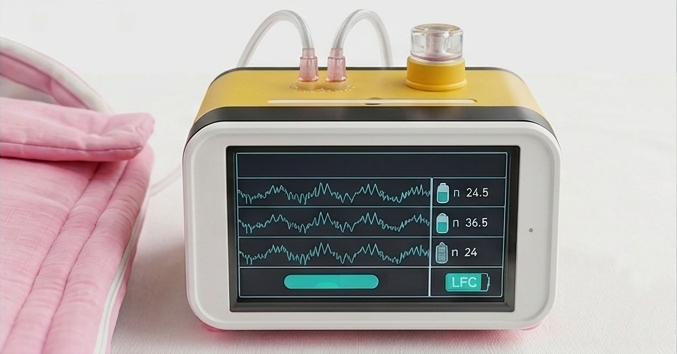
Continuous Temperature Monitoring - Three thermistor probes (axillary, abdominal, Peltier inlet) for precise multi-point thermal surveillance.
Continuous Power Supply - Designed for NICU, post-natal wards, and clinical settings with stable power infrastructure.
Government Patented - Indigenously designed and developed in India by Medline Robotics.
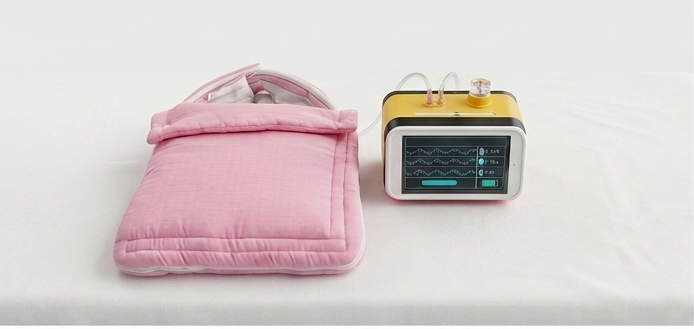
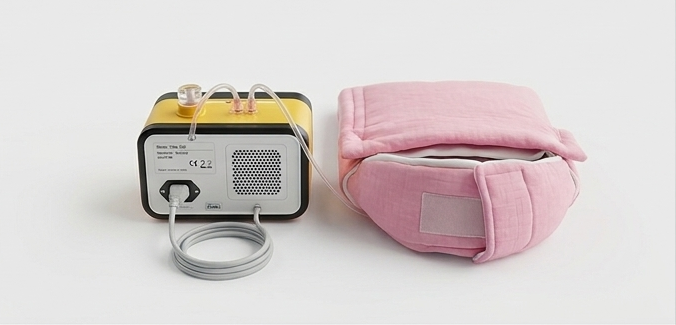
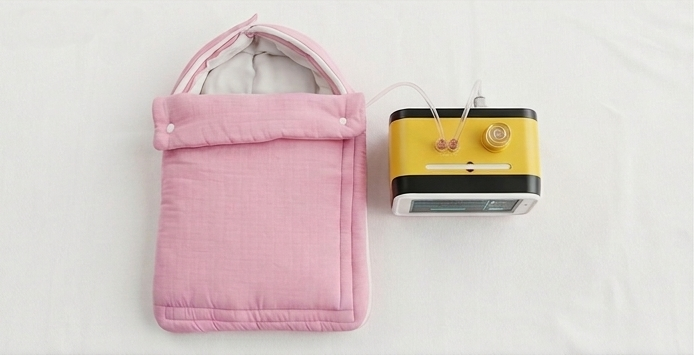
Warm Hug NH-02 - View 1
↓ Click thumbnail to explore all views
Trusted Credentials
 CDSCO
CDSCO ISO 13485
 Startup India
 MSME
MSMEWhat is the Warm Hug NH-02
The Warm Hug NH-02 is the advanced variant of the servo-controlled neonatal warmer, designed specifically for healthcare facilities. It supports three clinically distinct warming modes - Moderate (0.5°C/hr), Rapid (1°C/hr), and Slow (0.25°C/hr for research and clinical evaluation) - selected by the healthcare worker based on the infant's clinical presentation.
The device consists of two primary components: a Control Unit that regulates and delivers precise warmth while monitoring system performance, and an Infant Thermal Mattress internally lined with a circuit system for even heat distribution that wraps around the newborn to maintain a consistent temperature.
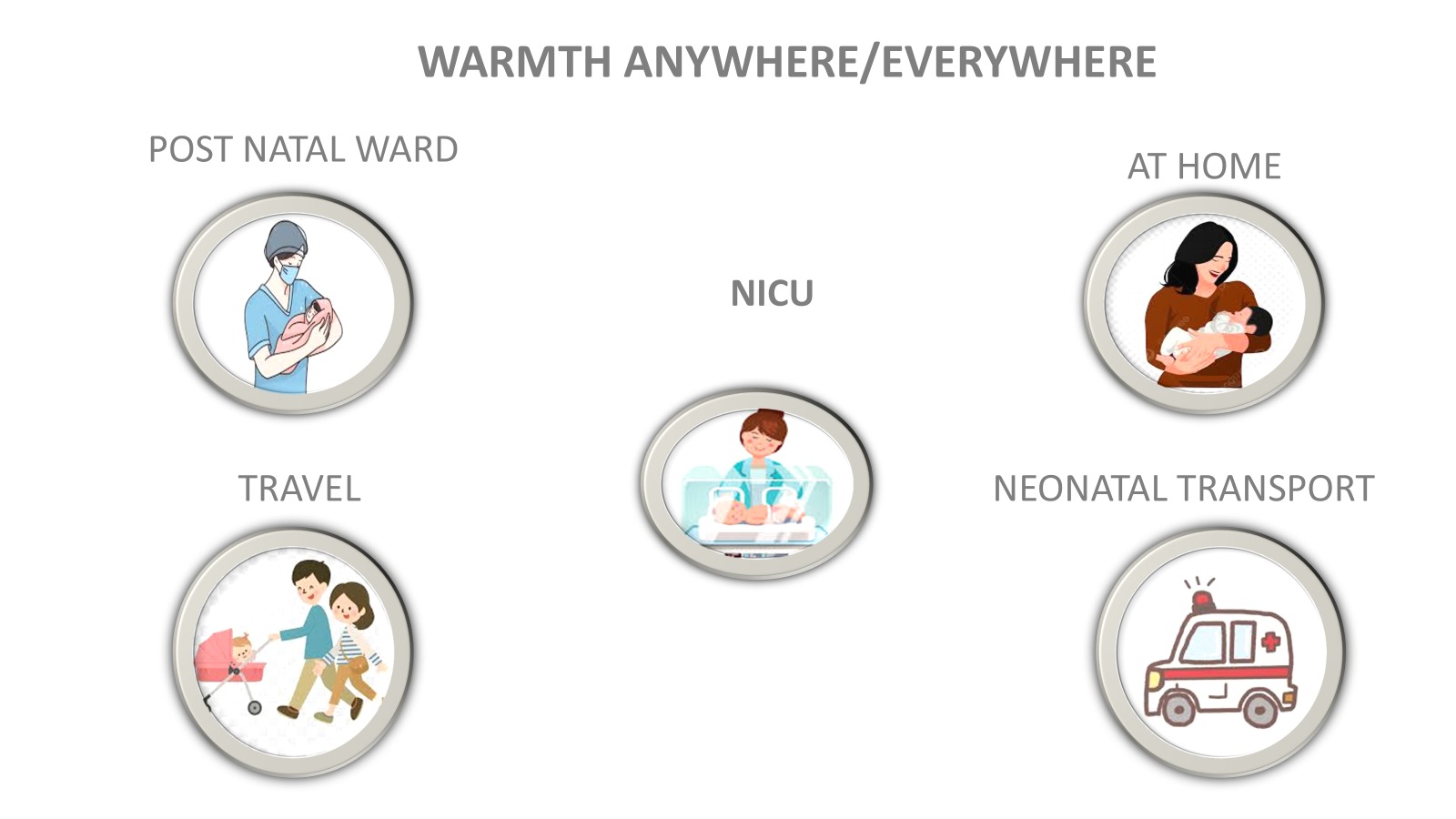
Built for NICUs, post-natal wards, emergency rooms, and neonatal transport, the NH-02 gives healthcare workers precise, protocol-compliant temperature management with a manual override capability to bypass servo-control for rapid heating when required.
Three Warming Protocols
Why It Matters
Expensive Radiant Warmers - require continuous power, highly trained operators, and significant infrastructure, making them inaccessible to many facilities and impractical for transport.
No Protocol-Specific Modes - standard warmers provide a single mode without the ability to differentiate between rapid and slow warming protocols based on clinical presentation.
No Rate-Controlled Warming - standard warmers do not offer clinically distinct warming rates. The NH-02 provides Moderate, Rapid, and Slow modes with precise °C/hr control, matching the protocol to the infant's clinical condition.
Key Features
Technical Specifications
| Components | Infant Thermal Mattress & Control Device |
| Sensors | 2 × IR sensors for infant temperature, 1 × IR sensor for mattress temperature |
| Temperature Monitoring | Real-time for both infant and mattress |
| Temperature Range | 36.5°C to 37.5°C |
| Display | Digital with waveform visualization |
| Alerts | Audio and visual alerts for hypothermia |
| Control System | Microcontroller-based feedback system |
Clinical Applications
Why Choose Warm Hug NH-02
| Feature | Conventional Radiant Warmer | Standard Incubator | Warm Hug NH-02 |
|---|---|---|---|
| Dual Warming Modes | ✗ Single mode only | ✗ Single mode only | ✓ Rapid & Slow protocols |
| Warming Mode Options | ✗ Single mode only | ✗ Single mode only | ✓ 3 modes: Moderate, Rapid, Slow |
| Manual Override | ✓ Manual control | ✗ Limited control | ✓ Auto + manual override |
| Neonatal Transport | ✗ Not portable | ✗ Heavy, not portable | ✓ Transport-compatible |
| Continuous Monitoring | ✓ Yes | ✓ Yes | ✓ Real-time, continuous |
| Precise Warming Rate Control | ✗ Not rate-controlled | ✗ Not rate-controlled | ✓ 0.25 / 0.5 / 1°C per hour |
| Audio & Visual Alerts | ✗ Limited alert system | ✗ Limited alert system | ✓ On-device audio & visual alarm |
| SMS Alert to Provider | ✗ No SMS alerts | ✗ No SMS alerts | ✓ Auto SMS on hypothermic event |
| Cost & Infrastructure | ✗ High cost, heavy infra | ✗ High cost, stationary | ✓ Affordable, minimal infra |
Common Questions
The Warm Hug NH-02 brings three-mode precision warming - Moderate, Rapid, and Slow - with manual override capability, designed for NICUs, post-natal wards, and neonatal transport. Contact us for institutional inquiries.